

Around the world, and increasingly in South Africa, people are rethinking how they drink. The focus is shifting from how much is poured to the quality of what’s being enjoyed. This change has led to a growing interest in no-and-low alcohol (NOLO) drinks that still offer depth of flavour, craftsmanship, and the social experience that comes with sharing a drink.
Behind the Shift Towards Mindful Drinking
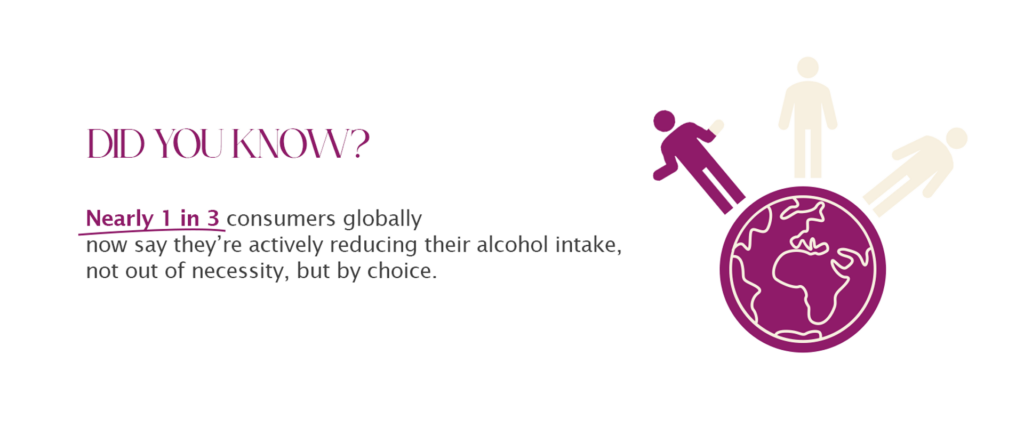
“Mindful drinking” is now among the top global lifestyle trends, alongside plant-based eating and digital detoxing.
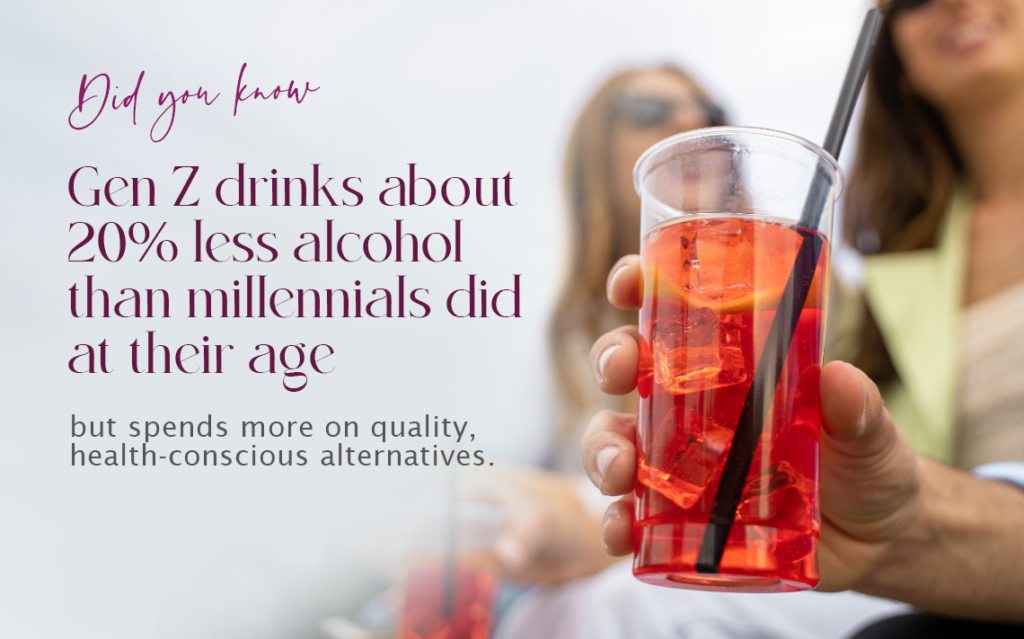
Health awareness and balance are becoming key motivators for many consumers. Younger generations in particular are redefining what it means to enjoy a drink. For some it is about wellness or focus, for others it is simply about feeling good without overindulging. Movements like “sober-curious” have turned moderation into a lifestyle choice rather than a restriction.
It is also suggested that COVID-19 alcohol bans accelerated interest in alternatives, with South Africa experiencing annual sales growth of 16% in the NOLO alcohol category leading up to 2024.
Innovation Driving the Category
Producers have responded with creativity and technical innovation. Advances in fermentation and de-alcoholisation mean that brewers and winemakers can now preserve much of the aroma, texture, and complexity of traditional drinks at lower alcohol levels. This has opened the door for an impressive range of products, from low-alcohol wines and ciders to botanical spirits with full flavour but a lighter touch.
Advanced de-alcoholisation technologies allow producers to preserve 90–95% of original aroma compounds, delivering flavour experiences that rival their alcoholic counterparts.
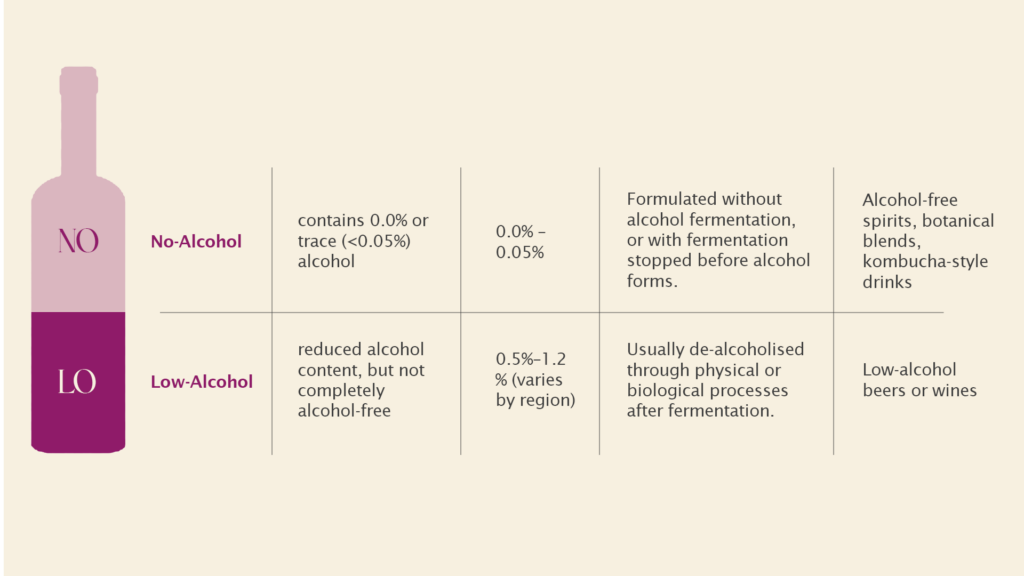
NOLO – The difference
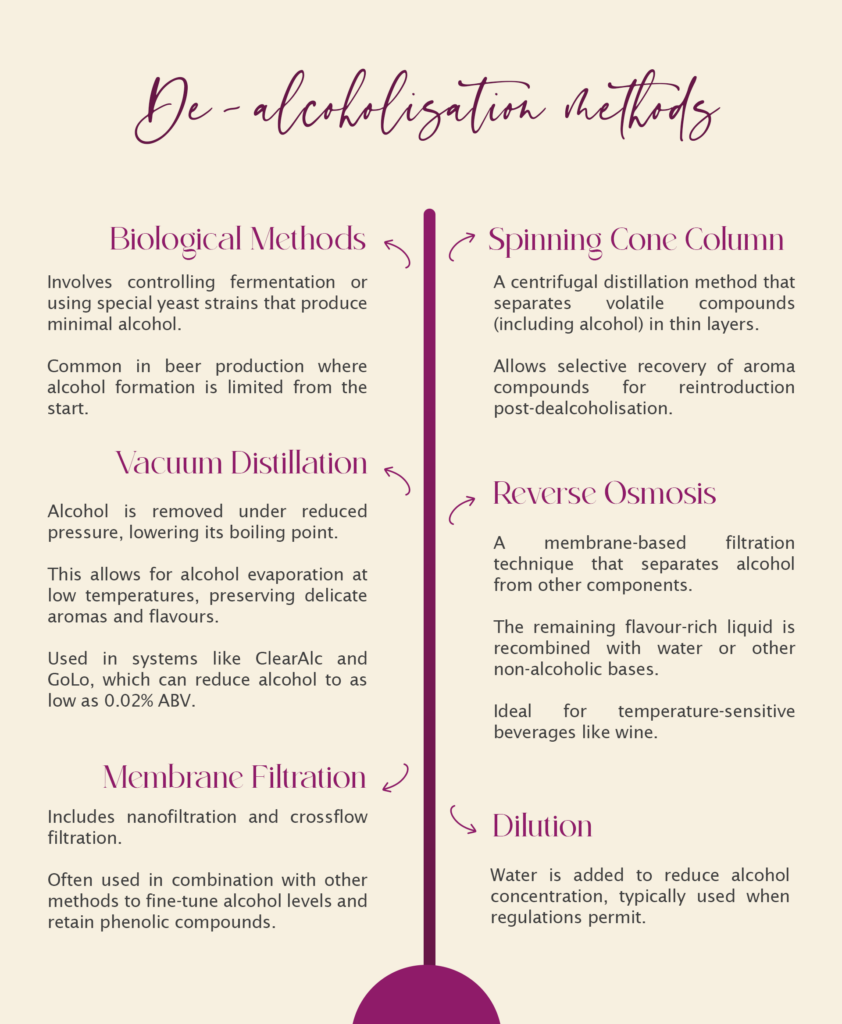
The De-Alcoholisation Process
De-alcoholisation traditionally refers to removing ethanol from an already fermented beverage ( ethanol is formed during the fermentation stage).
The South African Perspective
Here at home, the trend is gaining traction. South Africans have a strong culture of socialising and outdoor living, and low-alcohol options fit naturally into that lifestyle. Retailers and restaurants are expanding their selections, while local producers experiment with new blends and fermentation techniques to meet the shift in consumer preference.
This also creates new opportunities upstream. Suppliers of fermentation aids, filtration media, and specialty ingredients can play a key role in helping producers maintain quality and stability in these formulations.
Looking Ahead
The global no-and-low alcohol category is expected to continue growing strongly in the years ahead. This is more than a passing trend; it reflects a broader change in how people think about well-being, flavour, and connection.
For the beverage industry, it means continued focus on innovation and quality. For suppliers like us, it means supporting producers with the tools and ingredients needed to create great-tasting, balanced products. We do not see this trend as cannibalising traditional beverages, but rather expanding the total addressable market.
Moderation has moved from the sidelines to the mainstream, and it looks set to stay.
As the beverage landscape evolves, one thing is clear… when it comes to choice, the more options consumers have, the better.